Unlock Crystal Clarity: The Ultimate Guide to Glasses with Readers
Unlock Crystal Clarity: The Ultimate Guide to Glasses with Readers
【Understanding Age-Related Vision Changes】
The Science Behind Presbyopia: What Causes Blurry Near Vision?
Are you finding it increasingly difficult to read fine print on your phone or a menu? This common frustration is often the first sign of presbyopia, a natural age-related vision change, but the solution is clear and can even be stylish. This guide will help you understand why this happens and how to select the perfect pair of glasses with readers to restore your visual clarity. By exploring a quality collection of readers eyeglasses womens, you can find a fashionable frame that not only helps you see perfectly but also complements your personal style, providing immediate relief and a confidence boost.
:max_bytes(150000):strip_icc()/VWH-Presbyopia-How-Aging-Affects-Your-Vision-TEXT-FINAL-1-1-5d3c0e9f966443ef94194f82f0743498.png)
As we head into 2025, understanding the natural aging process of our eyes is more important than ever. The primary culprit behind the increasing difficulty with close-up tasks is a condition known as presbyopia. This is not a disease, but a normal, age-related change that affects everyone, usually starting around age 40.
This change is directly linked to the crystalline lens inside your eye, which is responsible for focusing light onto your retina. When you're young, this lens is soft and flexible, easily changing shape to focus on objects both near and far. These subtle adjustments are what allow for sharp, clear vision at all distances.
Natural Lens Flexibility Loss Explained
With age, the proteins within the lens begin to change, causing it to gradually thicken and lose its elasticity. This hardening process means the lens can no longer change shape as easily to focus on close objects.
Consequently, light from nearby objects, like the text in a book or on your phone screen, is focused behind the retina instead of directly on it. This results in blurry, out-of-focus vision for close-up tasks. This is precisely why many people find themselves needing glasses with readers as they enter their middle-aged years, and it's a key part of age-related vision changes explained.
Common Signs You Need Reading Glasses
Recognizing the early symptoms is the first step toward clearer vision. The signs you need reading glasses are often subtle at first but become more pronounced over time. You might notice yourself holding menus, books, or your smartphone at arm's length to see the text clearly.
Other common indicators include eye strain or headaches after short periods of reading or close work, experiencing tired eyes more frequently, or needing brighter light than you used to for reading. If these symptoms sound familiar, exploring options like purpose-built vision aids can offer immediate relief. For a blend of modern style and visual clarity, a pair of men's best reading glasses can be an excellent solution, allowing you to see clearly without sacrificing your look.
The Critical Role of Regular Eye Exams
While noticing the signs of presbyopia is a good starting point, self-diagnosis is never a substitute for professional medical advice. Regular comprehensive eye exams are crucial for maintaining not just clear vision, but overall eye health.
An eye doctor, or optometrist, can precisely determine the correct magnification strength you need for your reading spectacles. They do this by assessing your visual acuity and understanding your specific lifestyle needs, ensuring you get the most effective visual aid.
Detecting Undisclosed Vision Problems Beyond Presbyopia
A routine eye exam does much more than just confirm presbyopia. It is a critical health screening that can detect serious, often asymptomatic, eye conditions such as glaucoma, cataracts, and macular degeneration in their early stages. Early detection is paramount for effective treatment and preserving your sight.
Following the best practices for eye health while reading starts with a proper diagnosis. An optometrist will rule out other potential issues and can guide you toward the perfect magnifying eyewear for your unique needs. A professional consultation ensures you find the men's best reading glasses with the correct diopter strength, preventing unnecessary eye strain from using the wrong power.
When to Consult an Eye Doctor for Reading Issues
You should schedule an appointment with an eye doctor as soon as you notice persistent changes in your near vision. It is especially important to know when to consult an eye doctor for reading issues? if you experience more severe symptoms.
Seek immediate consultation if your vision changes suddenly, you experience eye pain, see flashes of light or an increase in "floaters," or if over-the-counter glasses with readers don't seem to improve your vision. These could be signs of a more serious underlying condition that requires prompt medical attention.
【Choosing Your Perfect Glasses with Readers】
Deciphering Reading Glass Strengths and Types
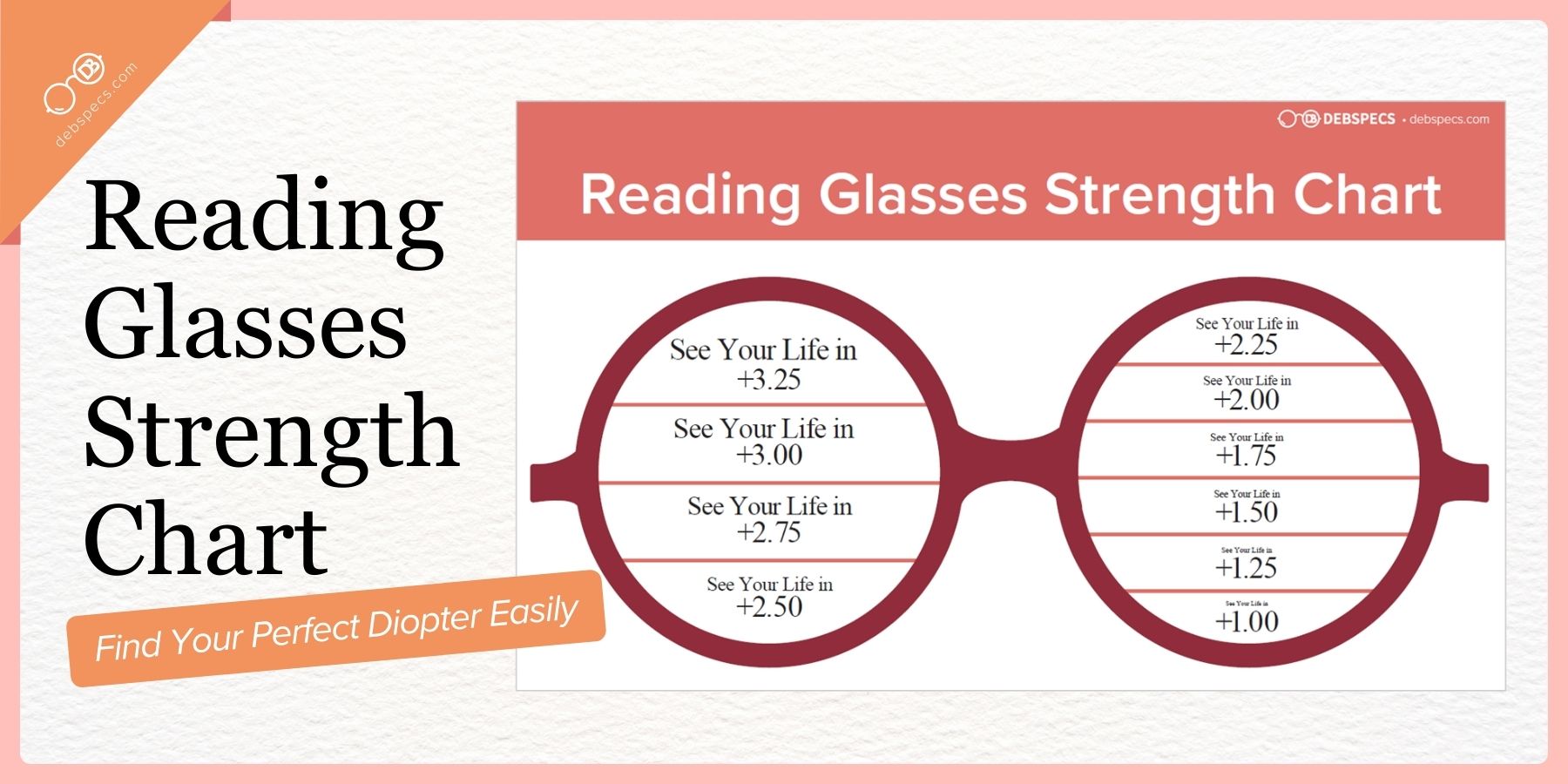
Understanding Diopters: How to Pick the Right Reading Glasses Strength?
Once you've confirmed you need reading assistance, the next step is selecting the correct strength. The power of reading lenses is measured in units called diopters. This measurement, often displayed as a "+" followed by a number (e.g., +1.25, +2.50), indicates the level of magnification the lenses provide. A higher number signifies stronger magnification.
How to pick the right reading glasses strength? While a generic age-based chart can offer a starting point (e.g., ages 40-44 often start with +1.00 to +1.25), it's not a precise method. The best approach is to test different strengths at a store using a reading card or, ideally, get a professional recommendation. Choosing the wrong strength can lead to unnecessary eye strain and headaches, defeating the purpose of getting magnifying eyewear.
Drugstore Reading Glasses vs. Prescription Lenses: A Comparison
You'll find two main categories of reading spectacles: over-the-counter (OTC) or "drugstore" readers and custom prescription lenses. OTC glasses with readers are inexpensive and convenient, offering a quick solution. They have the same diopter strength in both lenses and are designed for people whose eyes require identical correction.
However, many individuals have slightly different vision needs in each eye or have astigmatism, a common imperfection in the eye's curvature. In these cases, a custom eyeglass prescription reader from an optometrist is superior. These are tailored to your exact needs, including a precise pupillary distance (PD) measurement, ensuring the optical center of the lens aligns perfectly with your pupil for optimal clarity and comfort.
Exploring Types of Lenses for Reading: Bifocals and Progressives
For those who also need vision correction for distance, multi-focal lenses are a game-changer. There are several types of lenses for reading (bifocals, progressives). Bifocals feature two distinct lens powers separated by a visible line: the top portion for distance vision and the bottom segment for reading.
Progressive lenses offer a more modern and seamless alternative. They provide a smooth transition between distance, intermediate, and near vision without any lines. This allows for a more natural viewing experience. If you require correction for more than just reading, exploring these advanced lens types for your next pair of eyeglass prescription reader is a wise step, as they combine multiple prescriptions into one stylish frame.
Essential Features and Stylish Reading Glasses Trends
Benefits of Blue Light Blocking Readers for Digital Strain
In our screen-saturated world, digital eye strain is a growing concern. One of the key ways for how to reduce eye strain from screens? is by using lenses that filter blue light. The benefits of blue light blocking readers are significant for anyone who spends hours on a computer, tablet, or smartphone.
These specialized lenses are designed to filter out a portion of the high-energy visible (HEV) blue light emitted from digital devices. This can help reduce visual fatigue, minimize glare, and may even improve sleep patterns by not interfering with your body's melatonin production. Many modern glasses with readers now come with this protective feature.
Finding Your Style: From Classic to Contemporary Eyewear Trends
Gone are the days when reading glasses were a purely functional, uninspired necessity. The 2025 stylish reading glasses trends show that eyewear is a powerful fashion accessory. You can express your personal style, whether you prefer a bold, architectural frame, a minimalist metal design, or a vintage-inspired look.
Choosing a pair of vision aids is an opportunity to enhance your features and complement your wardrobe. You no longer have to sacrifice style for clear vision. The same attention to design and quality materials found in high-end sunglasses, such as these timeless Retro Square Sunglasses, is now prevalent in the world of reading eyewear, allowing you to see and be seen in style.
【Optimizing Your Reading Environment and Eye Care】

Best Practices for Eye Health While Reading
Setting Up Ideal Reading Light for Reduced Strain
One of the most effective best practices for eye health while reading is creating an optimal lighting environment. Poor lighting forces your eyes to work harder, leading to strain and fatigue. The goal is to have sufficient, glare-free light. For the best visual comfort, position your light source so it shines directly onto your reading material, not into your eyes. Ideally, this means placing a lamp beside and slightly behind you.
Avoid reading in dimly lit rooms or with a light source that creates harsh shadows or glare on the page or screen. Proper task lighting, combined with comfortable ambient light in the room, makes it significantly easier for your eyes to focus, especially when using your glasses with readers.
Ergonomics for Reading to Reduce Eye Fatigue
How you hold your body and your reading material is just as important as the lighting. Practicing good ergonomics for reading to reduce eye fatigue can prevent not only eye strain but also neck and back pain. Hold your book or device about 15-16 inches away from your face and slightly below eye level.
When sitting, ensure your feet are flat on the floor and your back is supported. Taking frequent breaks to stretch is also beneficial. Just as a comfortable chair supports your posture, a well-fitted pair of magnifying spectacles ensures your eyes are properly supported. Investing in quality designer reading glasses ensures the optical centers are correctly placed, providing you with the clearest, most comfortable vision for extended periods.
Preventing Dry Eyes When Reading: The Role of Lubricants
Do your eyes ever feel gritty or dry after a long reading session? This is a common issue. When we concentrate on close-up tasks, our blinking rate can decrease by up to 50%, which prevents the tear film from properly lubricating the eye's surface. A key strategy for preventing dry eyes when reading is to make a conscious effort to blink more often.
For persistent dryness, over-the-counter lubricating eye drops, also known as artificial tears, can provide immediate relief. Using these drops before you start reading can help maintain moisture. If you experience chronic dry eye, it's a topic to discuss with your eye doctor, who can ensure your eyeglass prescription reader is not contributing to the issue and recommend a specific lubricant.
Advanced Strategies for Digital and Close-Up Work
How to Reduce Eye Strain From Screens: Applying the 20-20-20 Rule
If you spend a lot of time in front of a computer, you've likely experienced digital eye strain. A simple yet powerful technique for how to reduce eye strain from screens? is the 20-20-20 rule. The concept is straightforward: every 20 minutes, take a 20-second break to look at something that is at least 20 feet away.
What is the 20-20-20 rule? It's a method for relaxing your eye's focusing muscles, which get overworked from staring at a close-up screen for long periods. This simple habit, combined with the use of appropriate vision aids like blue light filtering glasses with readers, can dramatically improve your comfort during the workday.
Magnifying Options for Reading Beyond Standard Glasses
While reading spectacles are the go-to solution for most people with presbyopia, there are other magnifying options for reading that can help in specific situations. For extremely fine print, such as on medication bottles or in detailed craftwork, a handheld or stand magnifier can provide an extra boost of power.
There are also digital magnifiers available as apps on smartphones and tablets, which use the device's camera to enlarge text. These tools are excellent supplements, but for daily reading comfort and convenience, nothing beats a pair of designer reading glasses tailored to your style and vision needs. You can explore a wide variety of fashionable and functional options by browsing our collection of designer reading glasses, ensuring you find the perfect pair to make reading a pleasure again.
Protecting Eyes During Hobbies and Close Work: Safety First
The principle of using the right tool for the job extends to your eyes, especially during hands-on activities. Protecting eyes during hobbies and close work is crucial. If you're model building, sewing, or working with tools, you need more than just magnification; you need protection. Many tasks pose a risk from small particles or debris.
Consider safety glasses, some of which are available with built-in reading magnification, providing both protection and clarity. This same principle of stylish protection applies to all aspects of your life. Protecting your eyes from UV rays is just as important as reducing reading strain. For superior style and defense against the sun, a pair of high-quality sunglasses, like these chic Retro Square Sunglasses, demonstrates that effective eyewear can and should be a fashion statement for 2025.
Your Path to Clearer Vision and Eye Health
Navigating the world of reading glasses doesn't have to be complicated. By understanding the root cause of blurry near vision—presbyopia—and recognizing the early signs, you're empowered to take control of your eye health. We've covered the critical importance of regular eye exams to not only get an accurate prescription but also to screen for more serious conditions. Choosing the right pair involves more than just a style choice; it's about selecting the correct diopter strength, deciding between over-the-counter and prescription options, and considering advanced features like blue light blocking lenses. Furthermore, implementing best practices such as optimizing your reading light, following the 20-20-20 rule, and maintaining good ergonomics will significantly reduce eye strain and enhance your comfort. Ultimately, finding the perfect vision aid is a blend of professional guidance and personal preference. Embrace the clarity and style that modern eyewear offers by exploring a curated collection of readers eyeglasses womens, and make reading a comfortable and enjoyable activity once again.
``` MjAyNTA4MTEwMjE4MDg 当前显示MjAyNTA4MTEwMjE4MDg。


Comments
Post a Comment