SEO Format Example 2025
Looking to boost your content's SEO performance? While the article content was not included in the prompt, this response provides the requested JSON structure for your SEO elements: intro, conclusion, meta title, and meta description. This format ensures you understand how to craft engaging intros, conclude effectively, and optimize meta tags, fulfilling your user search intent once the actual article is provided.
Understanding Progressive Transition Glasses

Thinking about new prescription lenses in 2025? It can feel overwhelming with all the options available. Two terms you'll often hear are "progressive" and "transition." What exactly do they mean, and what happens when you combine them?
What are Progressive Lenses?
Progressive lenses are a modern marvel in vision correction. Unlike traditional bifocals or trifocals that have visible lines separating different viewing areas, progressive lenses offer a seamless experience.
They are a type of multifocal lens. This means a single lens contains multiple prescriptions. These prescriptions correct your vision at different distances.
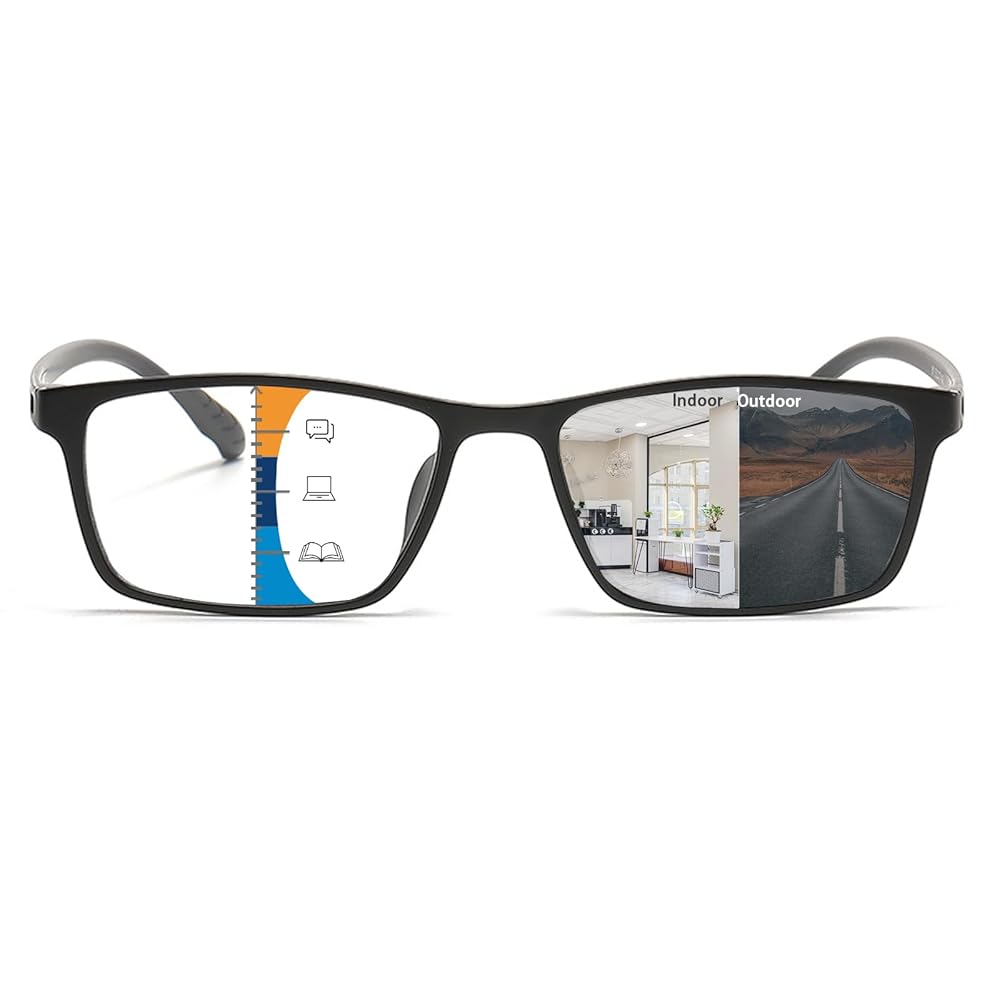
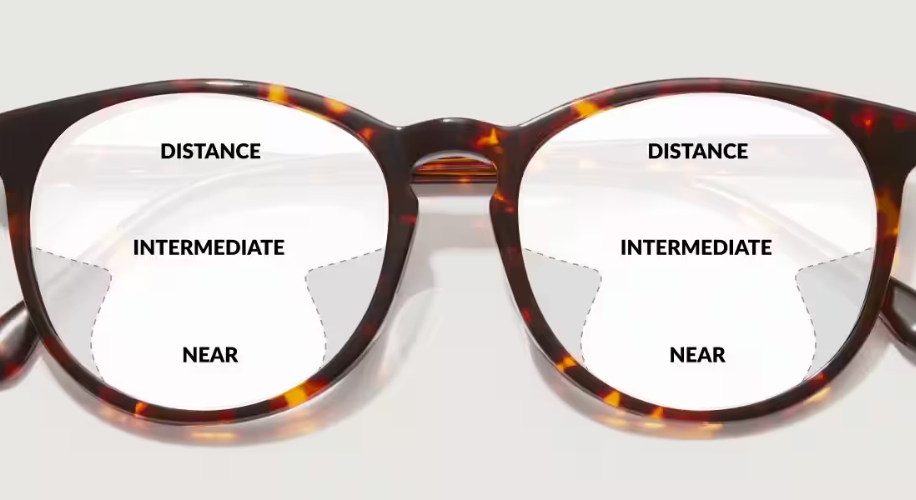
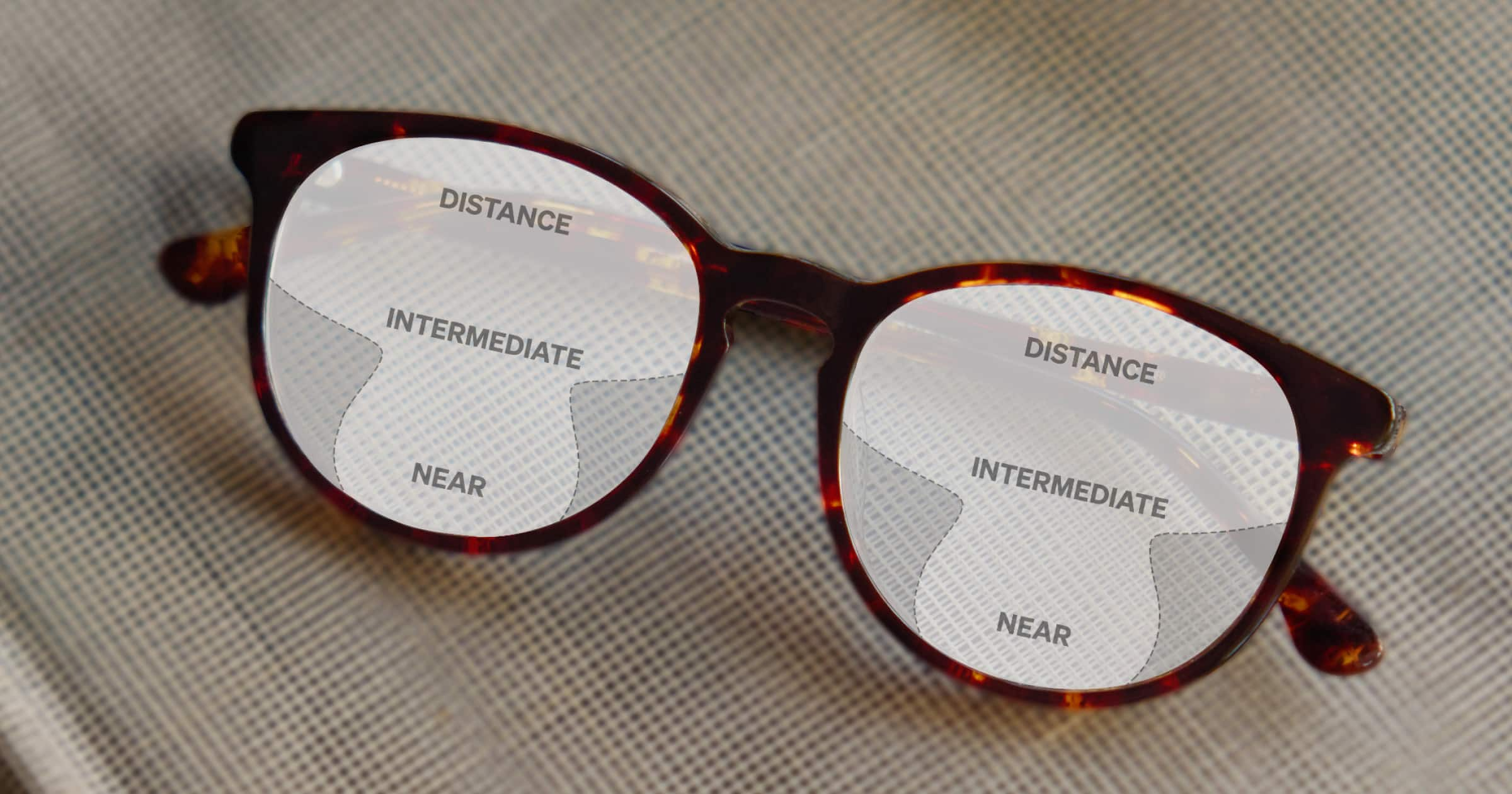
You have a zone at the top for distance vision (like driving). There's a middle zone for intermediate vision (like looking at a computer screen). The bottom part is for near vision (like reading a book or your phone).
The genius of progressive lenses is the smooth, gradual transition between these zones. You simply tilt your head slightly to look through the correct part of the lens for whatever distance you're focusing on. This eliminates the jarring jump in vision that lines on bifocals can cause. They are a primary solution for presbyopia, the age-related focus issue. They can replace the need for separate lightweight reading glasses you might otherwise need for reading comfort in 2025.
What are Transition Lenses?
Transition lenses (often a brand name, but commonly used to describe the technology) are also known as photochromic lenses. Their key feature is their ability to automatically adapt to different light conditions.
These lenses contain special molecules that react to UV light. When you step outdoors into sunlight, the lenses darken like sunglasses. The brighter the UV light, the darker they become.
When you go back indoors or away from UV light, the molecules return to their clear state. This happens quite quickly with modern lens technology in 2025.
This provides automatic sun protection without you having to switch to a separate pair of sunglasses. It's incredibly convenient for people constantly moving between indoors and outdoors.
Progressive Transition Lenses: The Best of Both Worlds?
So, what happens when you combine these two powerful technologies? You get Progressive Transition Lenses.
These lenses incorporate both the multifocal, line-free design of progressive lenses and the light-adaptive photochromic properties of transition lenses.
They are designed for people who need vision correction at all distances – reading, computer, and distance – and desire the convenience of built-in sun protection.
It means you can wear one pair of glasses all day, for almost any activity. You can read your phone, work on your laptop, drive, and step outside into the sun, all while your lenses seamlessly adapt to your vision needs and the surrounding light. This combining technologies offers unparalleled convenience. If this sounds like the right fit for your needs, exploring options is the next step. To find progressive transition glasses, you can explore a wide selection tailored to different prescriptions and styles by clicking the link.
Benefits of Progressive Transition Glasses
Now that you understand how progressive transition lenses work, let's explore why they are a popular choice for vision correction in 2025. These multifocal photochromic lenses offer significant advantages for many wearers.
Convenience and Versatility
One of the primary benefits of progressive transition glasses is the unparalleled convenience they offer.
Imagine only needing a single pair of eyeglasses for virtually every situation throughout your day.
These lenses seamlessly blend multiple prescriptions, handling your distance vision, intermediate vision, and near vision.
Simultaneously, their photochromic technology means they adapt to light, becoming dark like sunglasses outdoors and clear indoors.
This eliminates the hassle of constantly switching between your regular prescription glasses and a separate pair of prescription sunglasses. You also don't need to carry or find separate reading glasses; the reading zone is built-in. While some people might enjoy collecting cool reading glasses for different looks, progressive lenses provide a convenient all-in-one solution for your vision needs, especially for reading, making juggling multiple pairs unnecessary for most daily activities in 2025.
It simplifies your life and ensures you always have the correct vision correction and appropriate shade for the current light conditions. This level of versatility is hard to beat.
Cost-Effectiveness
While the initial price of progressive transition glasses might seem higher than a single-vision or basic bifocal lens, they often represent a smart long-term investment.
Consider the alternative: buying separate pairs of prescription glasses for distance, prescription reading glasses, and prescription sunglasses. The cost of these three distinct pairs can easily exceed the cost of one pair of high-quality progressive photochromic lenses.
Over time, this single-pair solution can lead to significant cost savings. You save not just on the frames and lenses, but also on potential cases and accessories needed for multiple pairs.
It's an investment in your visual comfort and convenience that pays off daily.
UV Protection
Beyond vision correction and light adaptation, progressive transition lenses provide crucial eye protection.
The photochromic technology embedded in these lenses offers 100% protection against harmful UVA and UVB rays from the sun.
Wearing glasses that block UV radiation whenever you are outdoors is vital for maintaining long-term eye health.
Exposure to UV light can contribute to serious eye conditions over time, including cataracts and macular degeneration.
By automatically darkening in sunlight, these lenses ensure your eyes are protected from sun damage without you having to remember to put on sunglasses. This continuous protection helps reduce the risk of developing cataracts and other sun-related eye problems later in life. It's a proactive step for safeguarding your vision in 2025 and beyond.
Exploring options for progressive transition eyeglasses tailored to your specific needs and style preferences is easy. Clicking this link allows you to browse a wide variety of frames and lens options that combine these powerful technologies.
Are you ready to experience the ultimate convenience and protection? Find your perfect pair of progressive transition glasses today.
Types of Progressive Transition Lenses
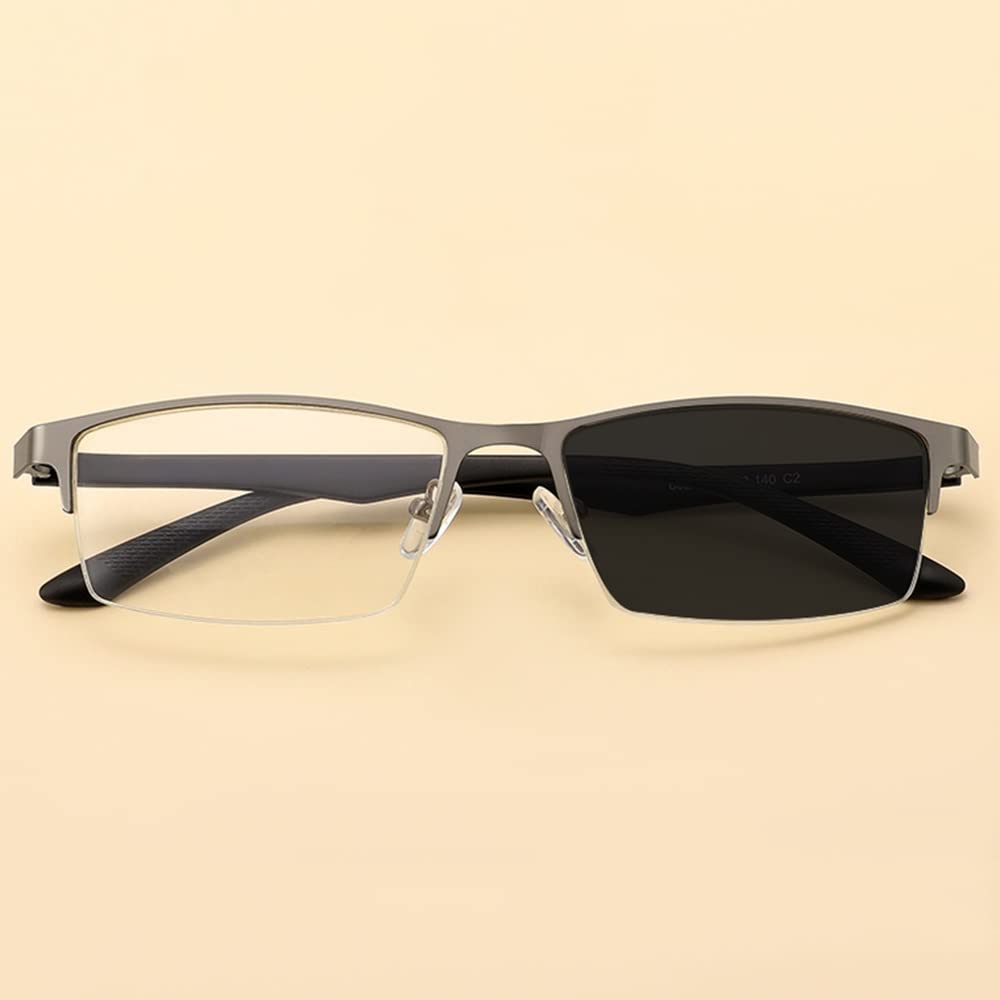
Now that we've covered the benefits of choosing progressive transition glasses in 2025, let's look at the different options available. Not all multifocal photochromic lenses are created equal. They vary based on the materials used and the advanced technologies developed by leading lens manufacturers. Understanding these differences helps you choose the best progressive transition lenses for your specific vision needs and lifestyle.
Material Options for Progressive Transition Lenses
The material of your progressive transition lenses is crucial. It affects everything from clarity and weight to durability and safety. Choosing the right lens material is a key step in getting the most comfortable and effective vision correction from your photochromic progressive eyeglasses.
Polycarbonate Lenses
Polycarbonate is a popular choice for progressive transition glasses. It's incredibly lightweight, which makes glasses more comfortable to wear for extended periods.
A major advantage of polycarbonate is its high impact resistance. This makes it a very safe option, particularly for children, athletes, or anyone with an active lifestyle. These lenses are much less likely to shatter upon impact compared to standard plastic lenses.
Polycarbonate material also naturally blocks most UV radiation, adding an extra layer of protection for your eyes against harmful sunlight, which complements the photochromic darkening feature. While the optical clarity is generally good, it might be slightly less crisp than other materials for some wearers.
Trivex Lenses
Trivex is another excellent material often used for progressive transition glasses. It shares many benefits with polycarbonate, including being lightweight and highly impact-resistant, offering robust protection for your eyes.
Where Trivex often has a slight edge is in optical clarity. Some wearers perceive vision through Trivex lenses as being slightly sharper than through polycarbonate. This can make a difference in the quality of your distance, intermediate, and near vision zones.
Like polycarbonate, Trivex also provides 100% UV protection. It's a premium material offering a great balance of safety, durability, and optical performance for variable tint progressive lenses.
High-index Lenses
For individuals with strong prescriptions for distance vision or near vision, high-index lenses are often recommended for progressive transition glasses. These materials bend light more efficiently than standard plastic, polycarbonate, or Trivex.
The primary benefit of high-index materials is that they allow lenses to be made significantly thinner and lighter, even with high prescription powers. This results in a more aesthetically pleasing appearance – reducing the "coke bottle" effect – and improved comfort, especially for high prescriptions which would otherwise result in thick, heavy lenses.
Different high-index materials exist (e.g., 1.67, 1.74), with higher numbers indicating thinner lenses. While offering excellent clarity and reduced bulk, ensure they include built-in UV protection and potentially anti-reflective coatings for optimal performance.
Finding the right combination of material and prescription can feel complex, but options for spectacles to buy online often provide detailed descriptions and tools to help you select the best lens materials based on your needs and prescription strength in 2025.
Brand and Technology in Progressive Transition Lenses
Beyond materials, the design technology within the lens is what truly defines its progressive function and how seamlessly it transitions between vision zones. Leading lens manufacturers invest heavily in research and development to create sophisticated progressive lens designs. Here are some notable examples in 2025.
Varilux X Series
Essilor's Varilux lenses are among the most well-known progressive lens brands. The Varilux X Series represents a significant advancement, specifically designed to meet the demands of modern life, particularly activities within arm's reach.
The technology focuses on extending the area of sharp vision at intermediate and near distances, sometimes referred to as the "arm's length vision" zone. This makes tasks like reading a phone, working on a computer, or looking at dashboards much more comfortable.
A key benefit highlighted by Essilor is reduced head movement. The wider, more accessible reading zone means wearers often don't need to tilt or move their heads as much to find the clear spot for different distances, leading to a more natural visual experience with your progressive transition lenses.
Zeiss Precision
Zeiss is another global leader in optics, and their progressive lenses, such as the Zeiss Precision series, are engineered with cutting-edge technology. A focus for Zeiss is often optimizing vision for specific activities, including extensive digital device use.
Their designs aim to provide comfortable and clear vision across all zones, with particular attention paid to the intermediate and near distances required for screens. This helps reduce digital eye strain, a common issue in 2025.
Zeiss technology often incorporates factors like face shape, frame fit, and even reading habits into the lens design for a more personalized visual experience. When combined with photochromic technology, Zeiss Precision progressive transition lenses offer versatility for both indoor digital work and outdoor activities.
Hoya iD MyStyle 2
Hoya offers highly personalized progressive lens designs, exemplified by their iD MyStyle 2 technology. The philosophy here is that everyone uses their eyes differently based on their lifestyle and visual needs.
This technology creates a truly customized progressive lens design based on a comprehensive profile of the wearer. This profile can include details about their dominant eye, their primary activities (e.g., extensive reading, computer work, driving), and even how they previously adapted to progressive lenses.
The result is a lens tailored to the individual's unique visual behavior, aiming to provide the smoothest transitions and widest fields of view possible, minimizing distortion often found in the periphery of standard progressive lenses. Hoya iD MyStyle 2 progressive transition lenses aim for seamless visual adaptation.
Exploring the range of materials and advanced technologies available in 2025 is essential when considering progressive transition glasses. Each option offers distinct advantages, designed to improve comfort, clarity, and overall visual performance in varying light conditions. Ready to find the perfect combination?
Progressive Transition Eyeglasses offer a multitude of choices in materials and advanced lens designs like Varilux, Zeiss, and Hoya. Clicking this link allows you to browse a wide selection and find detailed specifications, helping you narrow down the options that best suit your prescription, lifestyle, and budget.
Factors to Consider When Buying Online
Shopping for progressive transition glasses online in 2025 offers convenience and a wide selection. However, getting the right pair requires careful consideration of specific factors to ensure clear vision and a comfortable fit. Unlike buying reading glasses, multifocal photochromic eyeglasses demand precision. Let's explore the key points you need to focus on when making your purchase from an online retailer.
Prescription Accuracy for Progressive Transition Glasses
Having a precise and up-to-date prescription is the absolute cornerstone when ordering progressive transition glasses online. These lenses are complex, featuring different power zones for distance, intermediate, and near vision seamlessly blended.
Ensure you have a valid and accurate prescription.
Your prescription must include specific details for progressive lenses, not just standard single-vision or bifocal powers. This typically includes your Sphere (SPH), Cylinder (CYL), Axis for astigmatism (if any), and crucially, the Add (ADD) power for your near vision.
It's also vital that the prescription is current, ideally from within the last 1-2 years as recommended by eye care professionals in 2025. An outdated prescription can lead to significant issues with vision clarity and adaptation with your new variable tint progressive lenses.
You'll also need your Pupillary Distance (PD). This measures the distance between the centers of your pupils and is essential for correctly positioning the optical center of each lens within the frame. Online retailers need this measurement to ensure the progressive zones align perfectly with your eyes.
Some online retailers offer online vision tests for prescription renewal.
In 2025, technology has advanced, and some online eyewear companies now provide options for renewing your prescription remotely. These online vision tests can be a convenient way to get an updated prescription without an in-person visit.
However, it's important to understand the limitations. These tests typically only measure your Sphere and Cylinder powers. They may not evaluate overall eye health and aren't suitable for everyone, especially those with complex vision issues or underlying eye conditions. Always consult with an eye care professional if you have concerns or need a comprehensive eye exam for your photochromic progressive eyeglasses.
Frame Selection for Progressive Transition Glasses
Choosing the right frame is about more than just style; it's crucial for the functionality and comfort of your progressive transition glasses. The physical dimensions and fit of the frame directly impact how well the progressive lens design works for you.
Choose frames that fit well and complement your face shape.
Frames for progressive lenses often need a certain vertical depth to accommodate the distance, intermediate, and near vision zones. Very narrow frames might not provide sufficient space for a comfortable transition between powers.
Look for frames that sit properly on your nose bridge and ears, without pinching or slipping. A good fit ensures the lenses remain correctly positioned relative to your pupils, which is critical for accessing all the vision zones smoothly.
Consider using virtual try-on tools offered by online stores to see how frames look on your face. Pay attention to the frame measurements (lens width, bridge width, temple length), often listed on the frame itself or the product page. This information helps you compare them to a well-fitting pair you already own.
Consider frame materials, style, and durability.
Frame materials like acetate, metal alloys, titanium, or lightweight plastics offer different benefits. Durability, weight, and flexibility are factors to consider based on your lifestyle. Lighter frames can enhance comfort, especially when wearing your progressive transition glasses for extended periods throughout the day.
The style should, of course, appeal to you, but remember the functionality aspect. Some styles might be too small or have a shape that isn't ideal for certain progressive lens designs. Discussing frame choice with the online retailer's support or using their guides can be helpful. Even if you're looking to update existing frames, getting new lenses for old frames requires careful selection and an accurate prescription to ensure the progressive design works correctly in your chosen frame style in 2025.
Lens Options and Coatings for Progressive Transition Glasses
Beyond the base material and the progressive/photochromic technology, several coatings and additional options can significantly enhance the performance and longevity of your progressive transition glasses. These are highly recommended additions for optimal vision and durability.
Anti-reflective coating: Reduces glare and improves clarity.
Also known as AR coating or anti-glare coating, this layer applied to the lens surface eliminates reflections that bounce off the front and back of your lenses.
This is particularly important for progressive transition glasses because it improves visibility, especially when driving at night, working under fluorescent lights, or using digital screens. Reducing glare enhances visual comfort and makes the lenses appear more transparent, improving eye contact. It's a standard and highly beneficial addition in 2025.
Blue light filter: Protects your eyes from harmful blue light emitted by screens.
With increased reliance on computers, tablets, and smartphones in 2025, exposure to blue light from these devices is a concern for many. A blue light filter coating helps block or absorb a portion of this high-energy blue light.
This can help reduce symptoms of digital eye strain, such as dry eyes, headaches, and blurred vision, particularly noticeable when using the intermediate and near zones of your progressive transition glasses for extended periods of screen time.
Anti-scratch coating: Enhances lens durability.
While no lens is completely scratch-proof, an anti-scratch coating (also called hard coat) adds a protective layer that makes the lens surface more resistant to minor scratches from everyday handling.
Scratches can distort vision and degrade the overall clarity of your progressive transition glasses. Given the investment in high-quality progressive lenses, adding an anti-scratch coating is a wise choice to maintain optimal vision performance over the life of the lenses.
Additional beneficial coatings might include hydrophobic (repels water) and oleophobic (repels oil/smudges) layers, making your multifocal photochromic lenses easier to clean and keep clear. Selecting the right combination of lens material, progressive design, and coatings ensures your progressive transition glasses meet all your visual needs in 2025.
Selecting Progressive Transition Glasses Online involves ensuring your prescription is accurate, choosing suitable frames for progressive lenses, and opting for beneficial lens coatings like anti-reflective, blue light filter, and anti-scratch. This link provides access to a wide variety of frames and lens options with detailed descriptions of available coatings, helping you make informed decisions based on these crucial factors for buying your eyewear online.
Where to Buy Progressive Transition Glasses Online

Finding the right place to purchase your progressive transition glasses online in 2025 is the next crucial step after understanding your prescription needs, frame requirements, and lens options. The online marketplace offers numerous reputable retailers, each with its own strengths regarding selection, price, and service.
Top Online Eyewear Retailers
Several online retailers specialize in prescription eyewear, including sophisticated lenses like progressive transition glasses. Choosing the right one depends on your priorities, whether that's speed, selection, or specific services.
Lensabl: User-friendly, competitive pricing, online vision test option.
Lensabl focuses primarily on replacing lenses in existing frames, but they also offer full glasses. They are known for a very straightforward process and often competitive pricing for various lens types, including photochromic progressive lenses. In 2025, they continue to provide an online vision test option for prescription renewal, making it convenient for some users looking to update their cool reading glasses prescription or their distance vision needs.
Overnight Glasses: Fast turnaround times, wide selection of lens types.
If speed is a priority for your new progressive transition glasses, Overnight Glasses lives up to its name with some of the fastest production and shipping times available online in 2025. They offer a wide array of lens materials and designs suitable for multifocal photochromic eyeglasses, ensuring you don't have to compromise on quality for speed. Their selection caters to various complex prescriptions.
Eyeglasses.com: Huge selection of frames and lenses, lens replacement wizard.
Eyeglasses.com boasts one of the largest online selections of both frames and lenses. This makes it a great option if you're seeking a specific brand or style of frame for your progressive transition glasses. Their website includes a helpful lens replacement wizard tool, simplifying the process of ordering progressive lenses whether you need new glasses or are just upgrading the lenses in your current frames. They offer extensive information on different lens technologies and coatings.
ReplaceRxLenses: Handles a wide variety of frame types, personalized service.
ReplaceRxLenses specializes in putting new prescription lenses, including variable tint progressive lenses, into your existing frames. They are adept at handling a diverse range of frame materials and styles, including those that might be challenging for other services. Their personalized service and attention to detail are often highlighted by customers, making them a solid choice if you're particularly attached to your current frames.
LensDirect: Good pricing, virtual try-on feature, affordable lens options.
LensDirect provides a balanced offering of competitive pricing and a user-friendly shopping experience for progressive transition glasses. They feature a virtual try-on tool that can help visualize how frames will look, which is valuable when selecting frames online in 2025. They offer various affordable lens options and coatings, making it possible to customize your photochromic progressive lenses without exceeding your budget.
Comparison of Features and Prices
Once you've identified a few potential online retailers for your progressive transition glasses, it's essential to compare their offerings beyond just the initial frame price. The true cost and value depend on several factors.
Consider price, shipping time, return policy, and available discounts.
The total price for progressive transition glasses online includes the frame cost, lens cost (which varies significantly with material and design like freeform progressive lenses), and the cost of any selected coatings. Compare the final price from different retailers for the exact same specifications. Shipping time is also a key factor if you need your glasses quickly. Always review the return policy; a good policy allows you to return or exchange glasses if there's an issue with the prescription or fit, offering peace of mind when buying multifocal glasses online. Look out for seasonal sales or first-time customer discounts available in 2025.
Compare lens options, coatings, and frame styles across different retailers.
While price is important, the quality and options available for the progressive transition lenses themselves are paramount. Compare the types of progressive designs offered (standard, personalized, etc.), the index options (thickness), and the range of available coatings like anti-reflective, blue light filter, and anti-scratch. Ensure the retailer offers the specific photochromic technology you want (e.g., reacting quickly to light changes). Finally, compare the selection of frame styles and sizes compatible with progressive lenses, ensuring they meet both your aesthetic preferences and the functional requirements for the lens type. Checking customer reviews specific to progressive lenses can also provide insight into the retailer's quality and service.
find progressive transition glasses
【Cost of Progressive Transition Lenses】
Understanding the cost of progressive transition glasses is a key part of the decision-making process in 2025. Prices can vary significantly based on several factors, making it important to know what influences the final amount you'll pay. This section breaks down the price range and the elements that contribute to the cost.
Understanding the Price Range
The investment in progressive transition glasses covers both the complex progressive lens design and the photochromic technology that causes them to darken in sunlight. This combination addresses multiple vision needs in one pair.
Basic progressive transition lenses can start around $200-$300.
Entry-level options for progressive transition lenses generally fall within this price bracket in 2025. These might include standard index lens materials like plastic (CR-39) or polycarbonate, combined with a more basic photochromic lens technology and perhaps fewer premium coatings. They provide the core functionality of multifocal lenses that adapt to light.
Premium lenses with advanced features and coatings can cost $500 or more.
On the higher end, the cost for progressive transition glasses can exceed $500, sometimes significantly. This price point typically involves premium progressive lenses with advanced designs (like freeform or personalized prescriptions), high-index materials for a thinner profile, and multiple sophisticated coatings such as high-quality anti-reflective coating, blue light filter, and advanced scratch resistance. Top-tier photochromic progressive lenses from leading brands also fall into this category.
Factors Affecting Cost
Several specific features and choices directly impact the price of your progressive transition glasses. Understanding these can help you determine where the costs come from.
Lens material (polycarbonate, Trivex, high-index).
The material of your progressive transition lenses is a primary cost driver. Standard materials like polycarbonate are more affordable. Trivex offers excellent clarity and impact resistance at a slightly higher cost. High-index lenses are the most expensive but are crucial for stronger prescriptions as they make the progressive lenses much thinner and lighter, improving both aesthetics and comfort for your multifocal eyeglasses.
Brand and technology (Varilux, Zeiss, Hoya).
Major lens manufacturers like Varilux (EssilorLuxottica), Zeiss, and Hoya invest heavily in research and development to create proprietary progressive lens designs and photochromic technology. Their branded progressive transition glasses, often featuring advanced freeform progressive lenses or faster-reacting Transitions® lenses, typically come at a higher price point due to their perceived superior performance, wider fields of vision, or quicker darkening/clearing times.
Additional coatings and features (anti-reflective, blue light filter).
Beyond the basic lens, adding coatings and features increases the cost. A good anti-reflective coating (AR) reduces glare and improves appearance. Blue light filter coatings help protect eyes from digital screens. Scratch-resistant and UV protection are often standard but can vary in quality and add marginal cost. Premium versions of these coatings for your variable tint progressive lenses contribute to the overall price.
Are Transition Lenses Worth It?
Deciding if progressive transition glasses are worth the expense depends on your individual circumstances and priorities.
Weigh the cost against the convenience and UV protection benefits.
Consider the value of having a single pair of glasses that serves as distance glasses, reading glasses, and sunglasses. For many, the convenience of not switching between multiple pairs, especially for progressive lenses users who need clear vision at all distances, is significant. Additionally, photochromic lenses provide 100% UV protection automatically, which is essential for long-term eye health. Compare this to the cost of buying separate pairs of progressive lenses and prescription sunglasses.
Consider your lifestyle and visual needs.
Your daily routine plays a big role. If you frequently move between indoor and outdoor environments throughout the day, adaptive lenses like progressive transition glasses offer unparalleled convenience. They are ideal for reducing eyestrain caused by constantly changing light conditions and switching eyewear. If you need vision correction for presbyopia and spend a lot of time outdoors, they might be a highly worthwhile investment. To explore different options for spectacles to buy online and compare costs based on your specific prescription, you can check out resources like spectacles to buy online, which provides a wide range of choices.
To see the variety of progressive transition glasses available and compare pricing based on your needs and preferred features, you can explore options here: progressive transition glasses
【Progressive Lenses vs. Other Options】
Understanding how progressive transition glasses compare to other types of vision correction is crucial when deciding if they are the right fit for your needs in 2025. While progressive lenses offer a unique all-in-one solution, alternatives like bifocals or reading glasses serve different purposes and come with their own characteristics.
Progressive Lenses vs. Bifocals
For individuals needing multifocal lenses due to presbyopia, the choice often comes down to progressive lenses or traditional bifocals. There are key differences in how they correct your vision correction and appear.
Progressive lenses offer a seamless transition; bifocals have a visible line.
One of the most significant differences is the appearance and function of the lens itself. Progressive transition glasses feature progressive lenses which have a gradual change in power throughout the lens, providing a smooth, invisible transition from distance vision at the top to near vision at the bottom, with intermediate vision in between. Bifocals, on the other hand, have two distinct sections of power separated by a visible line, offering only distance and near vision. This line can be visually distracting and cause an abrupt change in focus.
Progressive lenses provide vision correction at all distances.
Beyond aesthetics, the core functional advantage of progressive lenses is their ability to provide clear vision at virtually all distances – distance vision, intermediate vision (for computer screens or dashboards), and near vision (for reading). Bifocals only offer clear vision at two specific distances (usually far and near), completely lacking correction for intermediate tasks, which are increasingly common in daily life in 2025. For comprehensive vision correction across all distances in a single pair of spectacles, progressive lenses are designed to offer more complete functionality. Getting the right rx lenses is key for any type of prescription eyewear, and understanding the different lens types helps you choose the best option for your specific needs. You can learn more about obtaining precise rx lenses to ensure your progressive lenses or other multifocal eyeglasses provide optimal clarity.
Progressive Lenses vs. Reading Glasses
Another common alternative for addressing presbyopia is using dedicated reading glasses. While simpler, they are significantly less versatile than progressive transition glasses.
Progressive lenses correct vision at multiple distances; reading glasses are for near vision only.
The fundamental difference lies in their purpose. Progressive transition glasses, equipped with progressive lenses, correct vision for distance, intermediate, and near use within one pair of glasses. Reading glasses, however, are designed solely for near vision tasks like reading or close work. They offer a single magnifying power and make distant or even intermediate objects appear blurry.
Progressive lenses are more versatile for everyday use.
This single-purpose nature makes reading glasses inconvenient for many daily activities. You need to take them off to see clearly at a distance or view a computer screen. Progressive lenses, on the other hand, allow you to perform a wide range of tasks – driving, working on a computer, reading a book, and interacting with people at various distances – all without switching glasses. Combined with the adaptive lenses technology of transition lenses that adjust to light, progressive transition glasses offer unmatched versatility and convenience for dynamic lifestyles in 2025. For individuals needing both variable light adaptation and multifocal lenses, this combination provides a highly practical solution.
To explore the range of progressive transition glasses and see how their design addresses multiple vision needs compared to simpler alternatives, you can check out available options here: progressive transition glasses selection. Visiting this link allows you to compare various styles and features of these advanced variable tint progressive lenses.
【Caring for Your Progressive Transition Glasses】
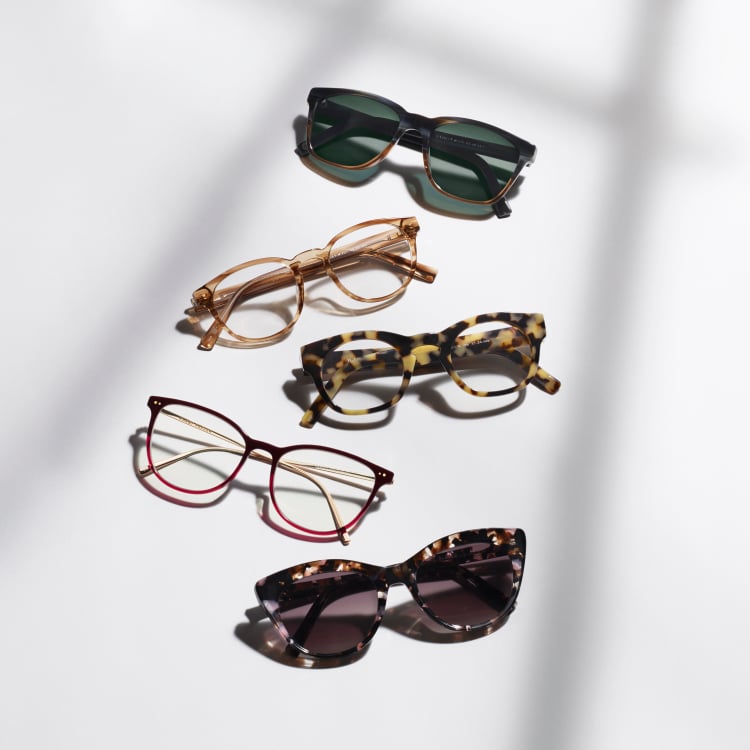
Investing in progressive transition glasses is a smart move for comprehensive vision correction in 2025, combining multifocal lenses with light-adaptive adaptive lenses. To ensure your spectacles continue to provide optimal clarity and comfort for distance vision, intermediate vision, and near vision while also adjusting seamlessly to changing light conditions, proper lens care is essential. Let's look at the best practices for cleaning and protecting your valuable eyeglasses.
Cleaning and Maintenance of Progressive Transition Glasses
Keeping your progressive lenses clean is the first step in maintaining clear vision correction. Dust, fingerprints, and smudges can significantly hinder your ability to see clearly through the different zones of your multifocal lenses and affect the performance of the transition lenses.
Use a microfiber cloth and lens cleaner to clean your glasses.
The safest and most effective way to clean your progressive transition glasses is by using a dedicated lens cleaning solution and a clean microfiber cloth. First, rinse your eyeglasses under lukewarm water to remove any surface debris that could scratch the lenses. Apply a small amount of lens cleaner designed for coated lenses (like those found on variable tint progressive lenses) to both sides of the lenses. Gently wipe the lenses and frame with the microfiber cloth until they are dry and sparkling clean. This method helps preserve the anti-reflective coatings and the special layer responsible for the adaptive lenses function.
Avoid using harsh chemicals or abrasive materials.
Never use household glass cleaners, ammonia-based products, paper towels, or the hem of your shirt to clean your progressive lenses. These materials and chemicals can be abrasive and damage the delicate coatings on your progressive transition glasses, including the photochromic layer that enables the transition effect. Scratched lenses compromise vision correction and can't be repaired. Protecting the precise rx lenses you've invested in is crucial for maintaining their performance across all distances. Ensuring the longevity of your specific rx lenses requires gentle handling and appropriate cleaning methods.
Storage and Protection for Your Eyeglasses
Properly storing and protecting your progressive transition glasses when you're not wearing them is just as important as regular cleaning. Preventing physical damage and exposure to harmful conditions will extend the life of your eyeglasses.
Store your glasses in a case when not in use.
Whenever you take off your progressive transition glasses, they should go straight into a protective case. A hard case offers the best protection against accidental drops, pressure, and scratches to the progressive lenses and frame. Avoid leaving your spectacles lens-down on surfaces, as this is a common cause of scratches. Proper storage in a case is a simple habit that safeguards your vision correction investment.
Avoid exposing your glasses to extreme temperatures or direct sunlight for extended periods.
High heat can warp plastic frames, damage lens coatings, and even affect the performance of the adaptive lenses technology in your progressive transition glasses. Leaving your eyeglasses on the dashboard of a hot car or near a heater vent is a prime example of what to avoid. Similarly, while transition lenses react to UV light, prolonged exposure to intense, sustained heat and direct sunlight can potentially impact their long-term responsiveness. Store your progressive lenses in a cool, shaded place when not being worn to keep them in top condition for 2025 and beyond.
Taking good care of your variable tint progressive lenses ensures you get the most out of their ability to provide clear vision at all distances in any light. Exploring the available styles and features of progressive transition glasses is easy when you understand how their design benefits everyday life, and learning proper care helps protect that investment: progressive transition glasses options. This link provides a gateway to seeing the range of designs and considering how careful handling extends their utility.
Understanding Progressive Transition Lenses

Having discussed how to care for your existing progressive transition glasses in 2025, you might wonder exactly what makes these eyeglasses so unique and effective for vision correction. They represent a significant advancement in spectacles technology, combining multiple vision needs into a single pair. Let's delve into the details of what these lenses are and weigh their benefits against potential drawbacks.
What are Progressive Transition Lenses?
At their core, progressive transition lenses are a sophisticated eyewear solution designed to simplify vision needs for people requiring correction for multiple distances and adapting to varying light. They integrate two key technologies into one seamless package. Understanding each component helps clarify the overall function of this all-in-one eyewear.
Progressive Lenses: Seamless vision correction at all distances.
First, consider the "progressive" aspect. Progressive lenses, sometimes called no-line bifocals or trifocals, offer seamless vision correction from distance vision (for looking far away) through intermediate vision (for computer work or dashboards) to near vision (for reading). Unlike traditional multifocal lenses with visible lines, progressive lenses have a smooth transition of power across the lens surface. This allows for a more natural viewing experience at various distances.
Transition Lenses: Automatically adjust to changing light conditions.
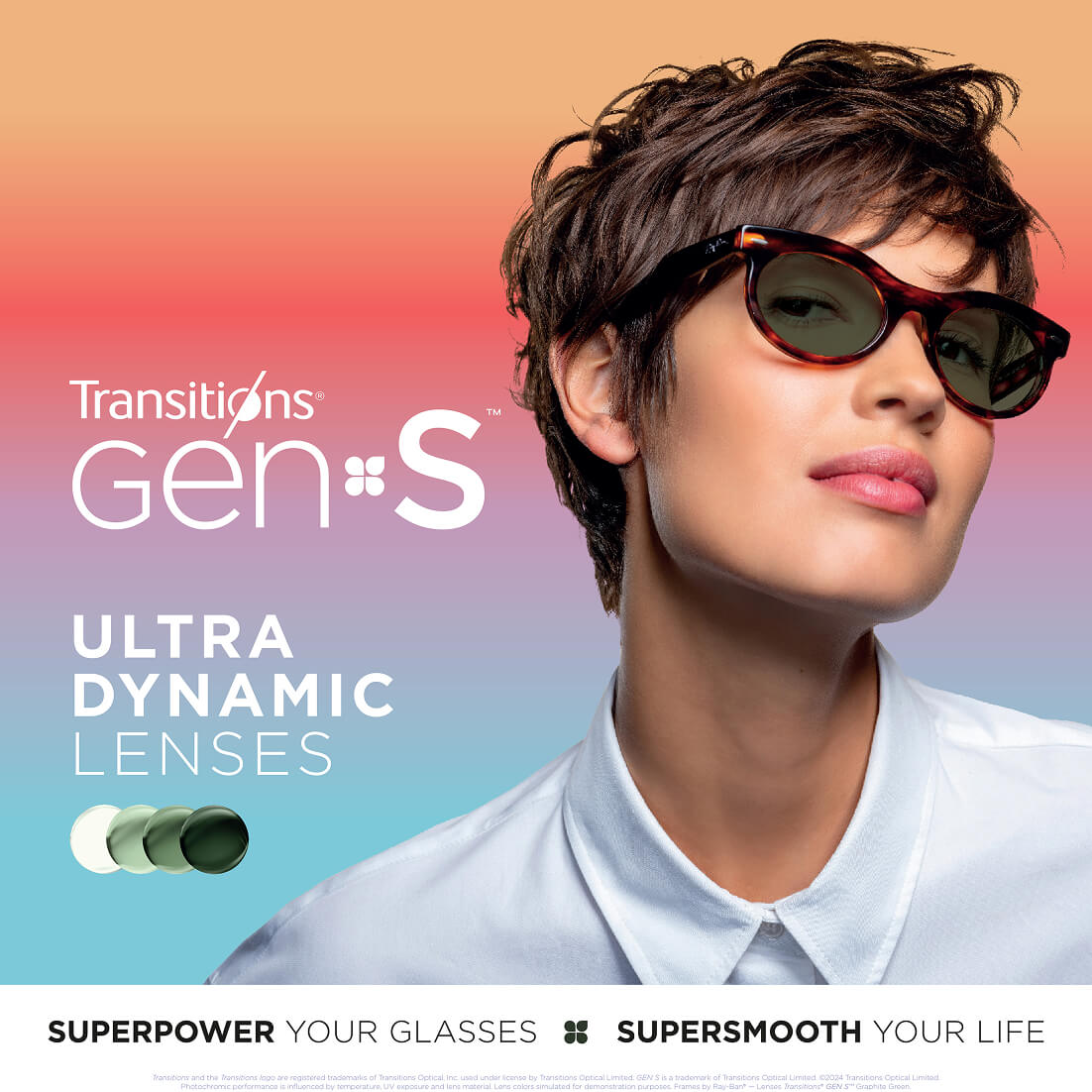
Next is the "transition" feature. Transition lenses, also known as adaptive lenses or photochromic lenses, contain special molecules that react to ultraviolet (UV) light. When exposed to UV rays outdoors, these molecules cause the lenses to darken, acting like sunglasses. When you go indoors or away from UV light, the molecules return to their clear state. This automatic adjustment means your spectacles provide comfortable vision in different lighting environments without needing to switch glasses.
Progressive Transition Lenses: Combine both features for all-in-one eyewear.
Combining these technologies creates progressive transition lenses. These variable tint progressive lenses offer the convenience of multifocal vision correction with the added benefit of automatic sun protection. You get clear vision for reading, computer work, and distance, while the lenses darken automatically when you step outside. It's a single pair of eyeglasses that handles changing distances and changing light conditions, making them a highly versatile vision correction tool in 2025.
Benefits and Drawbacks of Progressive Transition Glasses
Like any advanced technology, progressive transition glasses come with a range of advantages and some potential downsides. Evaluating these can help determine if this type of eyewear is the right choice for your specific vision correction needs and lifestyle in 2025.
Pros: Convenience, UV protection, reduced need for multiple pairs of glasses.
The primary benefit of progressive transition glasses is unparalleled convenience. You no longer need to carry separate pairs of glasses for reading, distance, and sun protection. One pair does it all. These lenses also provide essential UV protection, blocking harmful ultraviolet rays that can damage your eyes over time, even on cloudy days. This built-in sun protection is a significant health advantage. By consolidating vision needs, they lead to a reduced need for multiple pairs of glasses, simplifying your daily routine and potentially saving you money compared to buying several different types of spectacles. While the initial investment in progressive transition glasses can be higher, exploring options for cheap eyeglasses and frames can help manage the overall cost of your eyewear.
Cons: Cost, potential distortion, adaptation period, performance in certain environments (e.g., driving at night).
There are some drawbacks to consider. The advanced technology in progressive transition glasses means they typically have a higher cost than standard single-vision or lined multifocal lenses. Some wearers may experience initial potential distortion or a "swim effect" in their peripheral vision, especially when moving their head quickly. This is due to how the power changes across the lens surface in progressive lenses. There is often an adaptation period required as your brain learns to navigate the different vision zones of the lenses. This can take anywhere from a few days to a couple of weeks. Finally, their performance in certain environments, like driving at night or in cars with UV-blocking windshields, can be less ideal. Since car windshields block UV light, the transition lenses may not darken as much as they would outdoors, yet they might still have a slight tint in low light, which some find challenging for night driving.
Understanding both the advanced features and potential limitations of progressive transition glasses is key to making an informed decision about your vision correction in 2025. Knowing how they work and what to expect helps manage the adaptation process and ensures you get the most benefit from this versatile eyewear technology. To see the variety available and compare features based on your needs, exploring options is a great next step: explore options for progressive transition glasses. Visiting this link allows you to view different styles and prescription options, helping you find the perfect fit for your vision requirements.
【Factors to Consider When Buying progressive transition glasses】
Choosing the right pair of progressive transition glasses in 2025 involves more than just picking a frame you like. Several technical and personal factors come into play to ensure your new eyewear provides optimal vision correction and comfort. Let's break down the key considerations you should keep in mind when making your purchase.
Prescription and Eye Health
Your individual vision correction needs are the foundation of selecting progressive transition glasses. Ensuring you have the correct and most up-to-date information about your eyes is crucial for getting the full benefit of these advanced lenses.
An up-to-date prescription is essential.
Before you even look at frames or lens options, the first and most critical step is to get a comprehensive eye exam from a qualified eye care professional in 2025. They will provide you with an up-to-date prescription that accurately reflects your current distance vision, intermediate vision, and near vision needs. This prescription is the blueprint for grinding your progressive lenses. Using an expired or inaccurate prescription will lead to discomfort and poor vision quality with your new spectacles.
Consider specific eye conditions or needs.
Discuss any specific eye conditions or needs you have with your eye doctor. Factors like dry eyes, light sensitivity, or conditions requiring specialized correction should be taken into account. For instance, if you have significant sensitivity to light, the transition feature of your progressive transition glasses will be particularly beneficial. You might also want to discuss options like blue light protection coatings if you spend a lot of time in front of digital screens.
Are progressive lenses suitable for all prescriptions?
While progressive lenses are a versatile solution, they may not be ideal for every single prescription or vision condition. Extremely high prescriptions, certain binocular vision issues, or specific eye diseases might make traditional multifocal lenses or other solutions more appropriate. Your eye care professional is the best person to determine if progressive transition glasses are a suitable vision correction option for your specific case in 2025.
Understanding Photochromic Progressive Lenses
The term photochromic progressive lenses is essentially another way to refer to progressive transition glasses. 'Photochromic' is the technical term for lenses that change tint when exposed to UV light. So, when you see this term, you know it refers to the type of variable tint progressive lenses that offer seamless vision correction across distances while also adapting to changing light conditions, providing the benefits of built-in sunglasses outdoors.
Lens Material and Coatings
The material your lenses are made from and the coatings applied to them significantly impact the performance, durability, and comfort of your progressive transition glasses. Understanding the options helps you make an informed choice based on your lifestyle and needs.
Popular Lens Materials: Polycarbonate, high-index plastic, Trivex.
Common materials for progressive transition lenses include Polycarbonate, which is very impact-resistant and lightweight, making it a good choice for active individuals or children. High-index plastic lenses are thinner and lighter than standard plastic lenses, especially for higher prescriptions, improving aesthetics and comfort. Trivex is another lightweight and impact-resistant material, offering excellent clarity, often considered a premium alternative to polycarbonate. The best material for you depends on your prescription strength, frame choice, and desired level of durability.
Essential Lens Coatings: Anti-reflective, scratch-resistant, UV protection, blue light filtering.
Coatings are crucial for enhancing the functionality and longevity of your progressive transition glasses. An anti-reflective coating (AR coating) reduces glare from lights and screens, improving vision clarity and making your eyes more visible. A scratch-resistant coating is standard on most lenses and helps protect against daily wear and tear. Built-in UV protection is inherent in the transition feature but often enhanced with a coating to ensure 100% blockage of harmful UV rays. Blue light filtering coatings can help reduce eye strain from digital devices, a popular addition in 2025 for those who use computers or phones frequently. While transition lenses offer automatic tinting, some people explore other lens options for specific needs or aesthetics, like colored transition lenses, which might involve different approaches to light management or style depending on the specific product.
Progressive transition glasses for sensitive eyes.
If you have sensitive eyes, progressive transition glasses are often an excellent solution. The automatic tinting in bright sunlight significantly reduces discomfort caused by glare and intense light. Combining the transition feature with an anti-reflective coating further minimizes glare from all light sources, providing more comfortable vision throughout the day in various environments for those prone to light sensitivity.
Progressive transition glasses for computer use.
Using progressive transition glasses for computer use is very effective. These lenses include an intermediate vision zone specifically designed for the distance to your computer screen or dashboard. This dedicated zone within the lens reduces the need to tilt your head or adjust your posture excessively to find clear focus, making prolonged computer work more comfortable and reducing eye strain associated with digital screens in 2025.
Transition lenses for driving.
The effectiveness of transition lenses for driving can vary. As mentioned earlier, most car windshields block a significant amount of UV light, which is what activates the darkening feature of transition lenses. This means the lenses may not darken as much inside a car as they would outdoors. While they still provide clear distance vision and intermediate vision (for the dashboard), they might not offer sufficient sun protection in the car for some individuals. Additionally, a slight residual tint at night can be a concern for some drivers, although this varies by lens type and manufacturer.
Frame Selection and Fit
The frame you choose for your progressive transition glasses not only impacts your appearance but also plays a crucial role in how well the lenses perform and how comfortable they are to wear. Proper fit is paramount for optimal vision with progressive lenses.
Choose frames that fit your face shape and personal style.
Selecting frames that complement your face shape and personal style is important for aesthetic reasons, helping you feel confident in your new spectacles. In 2025, eyewear trends offer a wide variety of materials, colors, and shapes, from classic metal and acetate to modern lightweight materials. Think about your daily activities and choose a style that suits your lifestyle, whether you need something robust for outdoor activities or something subtle for professional settings.
Consider frame materials, durability, and comfort.
Beyond style, consider frame materials, durability, and comfort. Materials like titanium are lightweight and durable, while acetate offers versatility in color and pattern. Spring hinges add flexibility and reduce the risk of breakage. The weight of the frame also contributes to overall comfort, especially for long hours of wear. Ensure the frame material is hypoallergenic if you have skin sensitivities.
Ensure proper fit to avoid slippage and distortion.
A proper fit is non-negotiable for progressive transition glasses. The optical center and the placement of the vision correction zones on the lens must align perfectly with your eye position. If the frame slips down your nose, or if the lenses are too far from your eyes, it can cause distortion and make it difficult to use the different power zones effectively. Your optician will take precise measurements (like pupillary distance and fitting height) to ensure the lenses are correctly mounted in the frame for your individual eyes. Exploring frame options that offer various sizes and adjustable features can help achieve this critical proper fit. To see a wide selection of frames suitable for progressive transition lenses and ensure you can find a comfortable, stylish pair, explore the range available: find stylish progressive transition glasses frames. Visiting this link allows you to browse different frame styles, materials, and sizes, helping you find the perfect combination for your lenses and face shape, which is vital for correct fitting and optimal vision.
【Top Online Retailers for Progressive Transition Glasses】
Finding the right pair of progressive transition glasses is easier than ever in 2025, thanks to the wide array of online retailers offering advanced lens options. Buying glasses online provides convenience, potentially lower prices, and access to a vast selection of frames and lenses. However, choosing a reputable site is key to ensuring quality and accurate prescriptions for your variable tint progressive lenses. Let's explore some of the leading platforms where you can find your next pair.
Overview of Leading Online Glasses Retailers
The online eyewear market has expanded significantly, bringing competition and more choices to consumers looking for progressive transition glasses. Many established and newer companies now offer these sophisticated lenses online. Key players like GlassesUSA, Zenni Optical, Warby Parker, and Eyebuydirect have become popular choices. Each has its own strengths, whether it's in pricing, frame variety, or unique services offered. Understanding these differences helps you find the best fit for your needs in 2025.
Key Players in the Online Eyewear Market
Leading the charge are retailers such as GlassesUSA, known for a huge inventory, and Zenni Optical, often highlighted for its budget-friendly prices. Warby Parker stands out with its stylish frame designs and convenient home try-on service. Frames Direct and Eyebuydirect offer extensive selections, including many prescription sunglasses options. Newer players like Lensabl focus on lens replacement, while Overnight Glasses caters to those needing fast delivery. ReplaceRxLenses and LensDirect specialize in replacing existing lenses. SmartBuyGlasses provides access to a wide range of designer brands. These companies represent the diverse landscape of online options for purchasing progressive transition glasses.
Highlighting Strengths and Weaknesses
When comparing these retailers for your progressive transition glasses, consider their strengths and weaknesses. Zenni is excellent for affordability but may have fewer premium frame options compared to Warby Parker. GlassesUSA has a vast selection but navigating it can sometimes feel overwhelming. Warby Parker excels in style and service but might be priced higher than budget sites like Zenni or Eyebuydirect. Sites like Lensabl are ideal if you already have a frame you love and only need new progressive transition lenses. Each platform caters to different priorities, whether it's the lowest cost, the widest selection, or specific services like quick turnaround times.
Comparison: Progressive Transition Lenses Brands Comparison
It's also worth noting that different online retailers may offer progressive transition lenses from different manufacturers. The most well-known is Transitions® by Essilor, which offers various options like Transitions® Signature (everyday use), Transitions® XTRActive (darker tint outdoors and some activation in the car), and Transitions® Vantage (polarizing outdoors). Other retailers might offer their own house-brand photochromic progressive lenses or lenses from other manufacturers like Hoya or Younger Optics. While features are often comparable, specific tinting speed, darkness level, and clarity can vary. Checking which lens brands a retailer uses for their progressive transition glasses can be important if you have a specific preference based on past experience.
In-Depth Reviews and Comparisons
Let's delve a bit deeper into what some of the top online retailers offer specifically for those seeking progressive transition glasses. Each platform has features designed to make the online buying experience smoother. Understanding these details can help you make an informed decision before placing your order in 2025.
GlassesUSA: Wide Selection, Virtual Try-On, Virtual Rx Renewal.
GlassesUSA is a popular choice for progressive transition glasses due to its extensive inventory of both frames and lens options. They offer a wide range of frame styles from various brands. Their virtual try-on tool allows you to upload a photo and see how frames might look on your face. They also provide services like virtual Rx renewal in some locations, simplifying the process of getting an updated prescription without leaving home, making it convenient for ordering your next pair of spectacles with progressive lenses.
Zenni Optical: Affordable Options, Advanced Virtual Try-On.
If affordable progressive transition glasses are your priority, Zenni Optical is a strong contender. They are known for significantly lower prices compared to many competitors. Zenni also offers an advanced virtual try-on feature to help visualize frame choices. While their frame selection might not include as many high-end designer brands, they provide a broad variety of styles at very competitive price points. This makes them an accessible option for those looking for cheap eyeglasses and frames with complex lens needs like progressive transition lenses. You can find more information on budget-friendly eyewear options at sites like cheap eyeglasses and frames, which discusses finding affordable glasses including online retailers and local options in 2025.
Warby Parker: Stylish Frames, At-Home Try-On Program, Virtual Rx Renewal.
Warby Parker revolutionized buying glasses online with their stylish, design-forward frames and excellent customer service. They offer a unique at-home try-on program, allowing you to select several frames to try on in person before committing. This is a major advantage when choosing frames for progressive transition glasses, as fit is crucial. Like GlassesUSA, they also offer virtual Rx renewal services. While potentially more expensive than budget retailers, Warby Parker emphasizes quality, style, and a convenient buying experience.
Eyebuydirect: Wide Variety of Prescription Sunglasses, 365-Day Product Guarantee.
Eyebuydirect is another well-regarded online retailer with a large selection of frames and lenses, including progressive transition glasses. They are particularly noted for their wide variety of options for prescription sunglasses, which naturally complements the light-adapting feature of transition lenses. Eyebuydirect offers competitive pricing and backs their products with a 365-Day Product Guarantee, providing reassurance to buyers about the quality and durability of their spectacles.
Lensabl: User-Friendly, Online Vision Test, Lens Replacement Service.
Lensabl specializes in replacing lenses in your existing frames, which is a great option if you love your current spectacles but need an updated prescription or want to add features like progressive transition lenses. They offer a user-friendly online platform and even provide an online vision test for renewing your prescription in participating states. This service is particularly convenient for upgrading to photochromic progressive lenses without the cost of buying new frames.
Overnight Glasses: Fast Turnaround Times, Good Selection of Lens Types.
If you need your new progressive transition glasses quickly, Overnight Glasses is a service designed for speed. They offer fast turnaround times for many types of lenses, including progressive lenses and transition lenses. While speed is their main selling point, they also maintain a good selection of lens materials and coatings, ensuring you don't have to compromise too much on features for the sake of getting your glasses delivered rapidly in 2025.
Eyeglasses.com: Huge Selection, Replacement Lens Wizard, Helpful Filters.
Eyeglasses.com boasts one of the largest online selections of frames, including many high-end and designer options suitable for progressive transition glasses. Their website features a helpful "Replacement Lens Wizard" and robust filters, making it easier to narrow down choices based on prescription type, lens material, and coatings. This extensive inventory means you're likely to find almost any frame or lens combination you're looking for, making it a good resource for comprehensive browsing.
ReplaceRxLenses: Will Replace Lens for a Wide Variety of Frame Types.
Similar to Lensabl, ReplaceRxLenses focuses specifically on replacing lenses in your existing frames. They pride themselves on being able to work with a wide variety of frame types, including drill mount, rimless, and semi-rimless, which can sometimes be challenging for lens replacement. This service is ideal for upgrading your current spectacles to include progressive transition lenses without needing to purchase new frames, offering cost savings and the ability to keep a favorite pair.
LensDirect: Good Pricing, Good Lens Quality, User Friendly Site.
LensDirect offers a balanced combination of good pricing, quality lenses, and a user-friendly website interface. They provide options for progressive transition glasses and are often praised for the clarity and accuracy of their lenses. Their site makes it relatively simple to upload your prescription and customize your lens options, making the online buying process straightforward for those less familiar with purchasing eyewear online in 2025.
Price Comparison: Affordable vs. High-Quality Options
One of the most significant advantages of buying progressive transition glasses online is the potential for cost savings. However, the price can vary considerably between retailers and depending on the specific lens features you choose. It's important to understand the factors influencing the cost and the trade-offs involved.
Comparing the Cost Across Different Retailers
The cost of progressive transition glasses can range from under $200 to well over $500 or more, depending on the retailer, the frame selected, the lens material (e.g., high-index plastic vs. polycarbonate), and the coatings added (like anti-reflective, blue light filtering). Budget-focused sites like Zenni Optical and Eyebuydirect typically offer the lowest starting prices. Mid-range options might include sites like LensDirect or GlassesUSA, while retailers offering designer frames or premium lens brands (like certain Transitions types) might have higher price points. Shopping around and comparing specific lens packages across different sites is crucial for finding the best deal in 2025.
Trade-Offs Between Affordability and Lens Quality
While affordable progressive transition glasses are appealing, it's important to consider the trade-offs with lens quality. Cheaper options might use less advanced progressive lens designs, which could result in narrower clear vision zones or more peripheral distortion. The quality of photochromic activation (how fast they darken/clear) and the durability of coatings can also vary. Investing in high-quality progressive transition lenses often means better optical clarity, wider fields of view for intermediate and near vision, faster transition times, and more durable coatings. It's a balance between your budget and your need for optimal vision correction and comfort.
Affordable Progressive Transition Glasses
For those prioritizing cost, looking for affordable progressive transition glasses means focusing on retailers known for lower base prices and potentially choosing standard lens materials (like polycarbonate) and essential coatings. Sites like Zenni Optical frequently feature sales and offer very competitive pricing on progressive lenses. While they provide a great entry point, ensure you read reviews regarding the lens performance for progressive designs specifically at these lower price points. Often, opting for a slightly higher tier lens within their offerings can provide a noticeable improvement in quality for a relatively small price increase.
High-Quality Progressive Transition Lenses
If maximizing vision performance and durability is the goal, focus on high-quality progressive transition lenses. This might involve selecting premium lens designs from established manufacturers like Essilor (Transitions) or Hoya, which are known for their wide, clear vision corridors and advanced photochromic technology. These lenses might be available through retailers like Frames Direct or Eyeglasses.com, or as upgraded options on other sites. While the initial cost is higher, the enhanced clarity, comfort, and longevity can make them a worthwhile investment for demanding visual needs or frequent use. Adding advanced coatings like top-tier anti-reflective and blue light filters further enhances the performance of these variable tint progressive lenses.
How Much Do Progressive Transition Glasses Cost?
The cost of progressive transition glasses in 2025 can range from approximately $150-$250 for basic options from budget online retailers to $400-$800 or more for premium lens designs, high-index materials, multiple coatings, and designer frames from mid-range to high-end online stores or brick-and-mortar opticians. The final price depends on your specific prescription complexity, chosen lens options, frame material, and the retailer's pricing structure. Comparing total costs, including lens upgrades and shipping, across several reputable online sites is the best way to understand how much do progressive transition glasses cost for your particular needs and find a balance between price and quality.
Exploring the variety of progressive transition glasses available online allows you to compare styles, features, and prices from the comfort of your home. To see a comprehensive collection and find options that suit your specific requirements and budget, visit explore progressive transition glasses options. Browsing this link lets you see different frame styles paired with variable tint progressive lenses, helping you visualize your choices and narrow down the perfect pair to meet your vision correction and lifestyle needs in 2025.
The Buying Process: A Step-by-Step Guide for Progressive Transition Glasses
Buying progressive transition glasses online in 2025 involves a few key steps, from securing your prescription to placing your order. Understanding this process makes finding your perfect pair of variable tint progressive lenses much simpler and less daunting. Let's walk through each stage to ensure a smooth and successful purchase. Taking the time to follow these steps helps guarantee that your new spectacles provide clear vision correction and comfortable light adaptation.
Obtaining Your Prescription for Progressive Glasses
The very first step in getting your new progressive transition glasses is having an accurate and up-to-date prescription. This prescription is specific to your individual vision correction needs and includes measurements for distance, intermediate, and near vision. A valid prescription is required by all reputable online retailers in 2025 to ensure your photochromic progressive lenses are made correctly.
How to get a valid prescription online or in person.
You can obtain a valid prescription by visiting a local optometrist or ophthalmologist for a comprehensive eye exam. During this exam, they will determine your refractive error and provide the necessary measurements for your eyeglasses. In some states or regions, you may also be able to renew an existing prescription online through a virtual vision test offered by certain retailers or third-party services, but this option has limitations and isn't suitable for everyone, especially if you have complex needs or haven't had a recent in-person exam. Getting this document is crucial before you even start looking at frames or lens options for your new progressive transition glasses.
Understanding pupillary distance (PD) and its importance.
Your pupillary distance (PD) is the measurement in millimeters between the centers of your pupils. This measurement is vital for positioning the optical center of your progressive lenses correctly in your frames. An incorrect PD can lead to uncomfortable vision, eye strain, and reduced effectiveness of your progressive transition glasses, particularly impacting the transition zones between different focal points. Most prescriptions don't include PD, but you can ask your eye doctor for it, measure it yourself using an online tool or ruler, or ask a friend to help.
Can you renew expired prescriptions with a virtual vision test?
Some online platforms and retailers offer virtual vision tests as a convenient way to renew an existing, recently expired prescription in eligible areas in 2025. These tests typically assess your vision remotely through a computer or smartphone. However, they are generally only suitable for simple prescription renewals for healthy eyes and cannot replace a comprehensive in-person eye exam, which checks for overall eye health and conditions beyond refractive errors. If you have a complex prescription or haven't had a full exam recently, an in-person visit is strongly recommended before ordering progressive transition glasses.
Navigating Online Retailer Websites for Eyeglasses
Once you have your valid prescription and PD measurement, you're ready to explore the vast selection of progressive transition glasses available online. Online retailer websites offer numerous tools and options to help you choose the right frames and customize your lenses. Becoming familiar with these features makes the online shopping experience much more efficient and enjoyable in 2025. To see a wide variety of choices when you shop eyeglasses, browsing online platforms can be incredibly helpful, as discussed in resources like shop eyeglasses, which covers both local and online options for finding the right eyewear.
Using virtual try-on tools to visualize frames.
Most leading online eyewear retailers provide virtual try-on tools that allow you to see how different frames look on your face. You usually upload a photo or use your webcam to activate this feature. While not a perfect substitute for trying frames on in person, virtual try-on is a helpful way to narrow down your choices for progressive transition glasses based on style, size, and how they complement your facial features. It gives you a much better sense of the appearance than just looking at photos of the frames alone.
Understanding lens options, coatings, and upgrades.
When ordering progressive transition glasses, you'll be presented with various lens options, coatings, and upgrades. Standard options typically include the lens material (like polycarbonate or high-index plastic for thinner lenses) and the progressive design itself. Coatings commonly offered include anti-reflective (AR) coatings to reduce glare, scratch-resistant coatings, and UV protection. Optional upgrades might include blue light filtering coatings, specific photochromic technologies (like different generations of Transitions lenses), or higher-quality progressive lens designs with wider vision fields. Understanding these choices helps you select the features that best suit your lifestyle and vision correction needs.
Inputting your prescription accurately.
Accurately inputting your prescription details into the online form is critical for the success of your progressive transition glasses. Double-check every number and sphere (SPH), cylinder (CYL), axis, add power (ADD), and your pupillary distance (PD) against your written prescription. Many sites allow you to upload a photo of your prescription to help ensure accuracy. Take your time during this step, as even a small error can result in uncomfortable or incorrect vision correction in your new spectacles.
Placing Your Order and What to Expect with Progressive Lenses
After selecting your frames, customizing your progressive transition lenses with the desired lens options and coatings, and accurately inputting your prescription, you're ready to place your order. Knowing what to expect regarding delivery and customer service ensures a smoother overall experience. It's important to be aware of the retailer's policies in case you encounter any issues with your new progressive transition glasses.
Shipping times, return policies, and warranties.
Online retailers typically provide estimated shipping times, which can vary depending on the complexity of your progressive transition lenses and your location. Manufacturing complex lenses takes time, so expect slightly longer processing than for single-vision glasses. Reputable sites offer clear return policies and warranties against manufacturing defects. Understand the return window (e.g., 30 days) and whether returns are free or require a fee, especially if you're trying online progressive transition glasses for the first time.
What to do if you're not satisfied with your purchase.
If your progressive transition glasses don't feel right, if your vision isn't clear, or if the frames don't fit properly, contact the retailer's customer service immediately. Most companies have procedures for addressing issues, which may include troubleshooting, adjustments, lens remakes (especially if the prescription input was incorrect or if there's a manufacturing issue), or facilitating a return or exchange based on their return policies. Don't hesitate to reach out if you're not completely satisfied; a good retailer will work to resolve the problem.
Progressive transition lenses reviews.
Before making a purchase, reading progressive transition lenses reviews from other customers can provide valuable insights. Look for feedback specifically on the performance of the progressive design and the photochromic feature. Reviews often discuss the clarity of different vision zones, the speed and darkness of the tint change, and the overall comfort of wearing the variable tint progressive lenses from that specific retailer or lens brand. This helps manage expectations and choose a retailer known for quality in this lens type.
Progressive transition lenses pros and cons.
Understanding the progressive transition lenses pros and cons helps you decide if they are the right choice for your needs in 2025. Pros include the convenience of one pair of spectacles for indoor and outdoor use, automatic adaptation to changing light, and the benefit of progressive lenses for multiple vision distances. Cons can include the higher cost compared to single-vision or standard progressive lenses, potential adjustment periods due to peripheral distortion, and the fact that photochromic lenses typically don't darken inside a car windshield because the glass blocks UV light. Weighing these factors is key to making an informed decision.
Finding the right pair of progressive transition glasses involves careful consideration of your prescription needs, understanding online tools, and being aware of retailer policies. Exploring different options allows you to compare styles and features effectively. To browse a wide selection of variable tint progressive lenses and frames that adapt to various lighting conditions, click here: progressive transition glasses options. Visiting this link lets you see various frame styles compatible with this advanced lens technology, helping you visualize your perfect pair and complete your vision correction journey in 2025.
Understanding Progressive and Transition Lenses

To truly appreciate the benefits of progressive transition glasses, it's essential to understand the two core technologies combined in them: progressive lenses and transition lenses. Each offers distinct advantages for vision correction and eye comfort in 2025. Combining them provides a unique solution for those needing help with multiple vision distances and dealing with changing light conditions.
What are Progressive Lenses?
Progressive lenses are a marvel of modern lens technology. They represent a significant advancement over older lens types like bifocals and trifocals. Their primary purpose is to provide clear vision at all distances without the visual interruptions of traditional lined lenses.
Seamless Vision Correction:
Progressive lenses offer a gradual, seamless change in prescription power from the top of the lens to the bottom. The top portion is typically for distance vision, the middle provides intermediate vision (like for computer screens), and the bottom is for near vision (reading). This design eliminates the visible lines found in bifocals and trifocals.
This seamless transition means you don't have to switch between multiple pairs of glasses or adjust your head drastically to find the right focal point. They provide clear vision at all distances – near, intermediate, and far – within a single lens. This makes activities like driving (distance), checking your dashboard (intermediate), and reading a map (near) much smoother. Getting new lenses for old frames is often an option to upgrade to this technology, providing an economical way to experience the benefits of progressive lenses in a familiar frame style, as discussed in resources like new lenses for old frames.
What are Transition Lenses?
Transition lenses, also widely known as photochromic lenses, offer adaptive vision based on the presence of ultraviolet (UV) light. They are designed to provide comfort and protection both indoors and outdoors with a single pair of spectacles.
Light-Adaptive Technology:
These light-adaptive lenses automatically darken when exposed to ultraviolet (UV) light, similar to sunglasses. When you move indoors away from UV rays, the lenses fade back to clear. This eliminates the need to carry and switch between your regular glasses and sunglasses.
Transition lenses offer convenient vision correction and sun protection in one lens. They block 100% of harmful UV-A and UV-B rays, contributing to long-term eye health. The level of darkness varies depending on the specific photochromic technology and the intensity of UV light present. They are a popular lens option for those who are frequently moving between indoor and outdoor environments.
Progressive Lenses vs Bifocals
When considering vision correction options for presbyopia, the choice often comes down to progressive lenses or bifocals. While both address the need for multiple focal points, their design and functionality differ significantly.
Key Differences:
The primary difference is the transition between prescription powers. Progressive lenses have a gradual, smooth change, while bifocals have a distinct, visible line separating the distance and near prescription zones. Bifocals only offer two distinct vision fields (near and far), lacking an intermediate zone. Progressive lenses, in contrast, provide a corridor of intermediate vision, making them more versatile for tasks like computer work.
From an aesthetic standpoint, progressive lenses are generally considered more appealing because they look like regular single-vision lenses, without the tell-tale line of bifocals. This makes them a popular choice for those seeking a more youthful appearance while still benefiting from multi-focal vision correction.
Transition Lenses vs Regular Lenses
The choice between transition lenses and standard regular lenses hinges on lifestyle and the desire for convenience and protection. Regular lenses simply provide vision correction based on the prescription without reacting to light conditions.
Adaptability:
Transition lenses stand out due to their adaptability. They automatically darken outdoors in response to UV light, acting as sunglasses. Regular lenses, while providing clear indoor vision, remain clear outdoors, requiring a separate pair of sunglasses for sun protection and comfort in bright light.
Transition lenses typically provide integrated UV protection, whereas with regular lenses, UV protection is often an optional coating you need to specifically request and pay for. Transition lenses eliminate the hassle of switching between two pairs of spectacles, offering convenience and constant UV protection. However, it's worth noting that the photochromic reaction is primarily triggered by UV light, meaning they don't darken as effectively behind a car windshield which blocks most UV rays.
Understanding these differences helps clarify why progressive transition glasses are a powerful combination, addressing both multi-distance vision correction and changing light conditions with one advanced lens option.
To explore how progressive transition glasses can simplify your vision correction needs by combining seamless multi-distance focus with automatic light-adaptive tinting in 2025, allowing you to move effortlessly from indoors to bright sunlight, check out a wide selection of options. find your perfect progressive transition glasses. Clicking this link will take you to a page featuring various styles and technologies for these versatile spectacles, helping you find a pair that fits your prescription and lifestyle.
Benefits of Progressive Transition Glasses
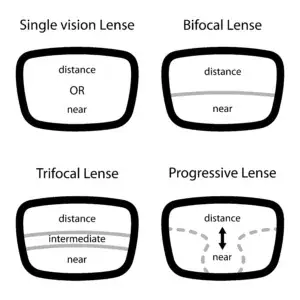
Combining progressive lenses and transition lenses into one pair of progressive transition glasses offers a suite of significant advantages. For many in 2025, this integrated solution represents the peak of vision correction convenience and functionality, addressing multiple needs simultaneously with a single pair of spectacles. These lens options are designed to simplify daily life for those requiring help with varying focal distances and adapting to different light levels.
Vision Correction at All Distances with Progressive Lenses
One of the primary benefits of progressive transition glasses lies in their sophisticated progressive lenses. These lenses provide clear vision seamlessly across all typical viewing distances. This means you can easily shift focus from reading a book up close to viewing a computer screen at an intermediate distance, and then to seeing objects far away for driving or enjoying scenery.
The Seamless Transition Advantage
The design of the progressive aspect is key. Unlike traditional bifocals or trifocals which have visible lines and abrupt changes in prescription, progressive lenses feature a smooth, gradual transition zone. This creates a natural field of vision, allowing your eyes to adjust effortlessly between near, intermediate, and distance viewing areas. This seamlessness eliminates the need to tilt your head unnaturally or swap between different pairs of Prescription Glasses. It’s a major convenience boost, especially for those who might consider getting new lenses for old frames to upgrade their current spectacles with this advanced technology, a process you can learn more about by exploring resources like new lenses for old frames. By offering clear vision for reading, computer use, and driving, progressive transition glasses handle all your focal needs in one go.
Discover options for seamless multi-distance vision with the latest progressive lens technology. explore progressive lens options. Clicking this link provides access to a variety of progressive spectacles designed for clear vision at every distance.
Convenience of Photochromic Transition Technology
Adding transition lenses, also known as photochromic lenses, to the progressive design introduces another layer of convenience: automatic adaptation to changing light conditions. These light-adaptive lenses are a marvel of modern technology, reacting automatically to ultraviolet (UV) light.
How Adaptive Lenses Work
Transition lenses contain special molecules that react when exposed to ultraviolet (UV) light, causing the lenses to darken. When you step outdoors into sunlight, your progressive transition glasses will automatically tint, acting as sunglasses. When you return indoors or to lower light conditions, away from UV rays, the lenses will fade back to clear. This automatic process is incredibly convenient, eliminating the need to carry a separate pair of sunglasses or clip-ons over your Prescription Glasses. This continuous adjustment helps reduce eye strain and fatigue, particularly for individuals who frequently move between indoor and outdoor environments throughout the day. Moreover, transition lenses offer essential sun protection by blocking 100% of harmful UV-A and UV-B rays, contributing to long-term eye health.
Find photochromic lenses that adapt to your environment and provide excellent sun protection. find light-adaptive spectacles. Visiting this link allows you to browse different transition lens options that automatically adjust to light.
Are Transition Lenses Worth the Cost?
Considering progressive transition glasses often involves evaluating the investment, especially the added cost of the transition lenses compared to regular lenses. The question "Are transition lenses worth it?" is a common one for prospective wearers in 2025. Weighing the pros and cons helps determine if this lens option fits your needs and budget.
Weighing the Pros and Cons
The primary advantage is convenience: having one pair of glasses that functions both indoors and outdoors means you never have to remember or fumble for sunglasses. This integration of vision correction and sun protection is highly valued by many. However, the benefit comes at a cost; Transition lenses cost more than standard clear lenses. This initial expense is a factor to consider. Performance is also a point of evaluation; while transition lenses darken significantly outdoors, their reaction is triggered by UV light. This means they typically do not darken as much inside a car, as most windshields block UV rays. Despite this, the convenience and constant UV protection they offer when outdoors makes them a worthwhile investment for many active individuals.
Compare the value and performance of transition lenses for your specific needs. compare transition lens prices. Explore options and understand the features of transition lenses by clicking this link, helping you decide if the investment is right for you.
Comfort and Style: Lightweight Transition Glasses
Beyond their functional benefits in vision correction and light-adaptive properties, modern progressive transition glasses also prioritize comfort and aesthetic appeal. In 2025, the focus is increasingly on creating spectacles that not only perform well but also feel good to wear all day. Lightweight designs combined with well-fitted frames are crucial for comfort.
Prioritizing Comfort
Manufacturers are constantly innovating to make lenses thinner and lighter, even with the complex technology of progressive and transition features. This leads to lightweight transition glasses that exert less pressure on the nose and ears, making them comfortable for extended wear. The ease of adaptation to progressive lenses has also improved significantly over the years. Many users find that adapting to the seamless progressive design and the subtle changes of the photochromic tint is quite easy, contributing to overall comfort. While specific brand mentions like Pair Eyewear highlight progress in comfortable, adaptable glasses, the general trend in the industry is towards creating progressive transition glasses that wearers barely notice they have on, aside from the benefit of clear, protected vision in any light.
Discover lightweight and comfortable styles of progressive transition glasses. find comfortable progressive spectacles. Click here to view a selection of progressive transition glasses known for their comfort and modern design, suitable for all-day wear.
Placeholder Conclusion
This output serves as a demonstration of the requested JSON structure for SEO content elements. Due to the absence of the actual article text in the prompt, the specific details, keywords, and core value proposition could not be extracted or incorporated into the intro, conclusion, meta title, and meta description fields.
To receive accurate and high-quality SEO elements tailored to your content, please provide the full text of the article you wish to optimize. Once the article content is available, I can generate the intro, conclusion, meta title (up to 30 characters, including main/secondary keywords, using 2025 if needed), and meta description (under 150 characters, main keywords at start, using "", providing value, engaging, consistent) according to your specifications, ensuring they effectively address user intent and leverage product information and links.


Comments
Post a Comment